Most home office upgrades focus on what you can see: monitors, desks, chairs, lighting. But the quality of the air you breathe throughout your workday has a measurable impact on how you think, how you feel, and how productively you work — and most people never give it a second thought.
The Science of Air Quality and Cognitive Performance
The research here is clear and significant. Studies from Harvard’s T.H. Chan School of Public Health found that cognitive scores were dramatically higher in well-ventilated, low-pollutant environments compared to standard office air conditions. The specific areas affected include:
- Decision-making
- Response time
- Focused thinking
- Information use
The pollutants that most impact home air quality include volatile organic compounds (VOCs) from furniture and cleaning products, particulate matter (PM2.5) from cooking and outdoor pollution, CO2 buildup from breathing in a closed room, and humidity levels that are too low or too high.
A home office — especially one in a spare bedroom with the door closed — accumulates all of these over the course of a workday.
CO2: The Silent Focus Killer
CO2 is produced by every breath you exhale. In a well-ventilated office building, CO2 is constantly diluted by fresh air exchange. In a home office with closed windows and a closed door, CO2 builds steadily throughout the day.
Outdoor air CO2 concentration is roughly 420 ppm. Indoor air in a closed room with one person can exceed 1,500–2,000 ppm within a few hours. At these levels, cognitive performance is measurably impaired — most people notice it as a feeling of mental fogginess, fatigue, or difficulty concentrating. The fix is straightforward: open a window, or take regular breaks to step outside.
A CO2 monitor for your desk makes the invisible visible. When you see the number climb, you know it’s time to ventilate.
Particulate Matter and VOCs
Particulate matter (PM2.5) refers to tiny airborne particles from outdoor pollution, cooking smoke, candles, or even printer toner. At high concentrations, these particles are associated with respiratory irritation and long-term health effects. An air purifier with a HEPA filter captures PM2.5 effectively.
VOCs are gases released by furniture, paint, carpets, cleaning products, and electronics. New furniture and fresh paint are significant sources. They’re associated with headaches, eye irritation, and “sick building syndrome.” Good ventilation and air purification help, as do plants (to a limited extent — more on that below).
Air Purifiers: What to Look For
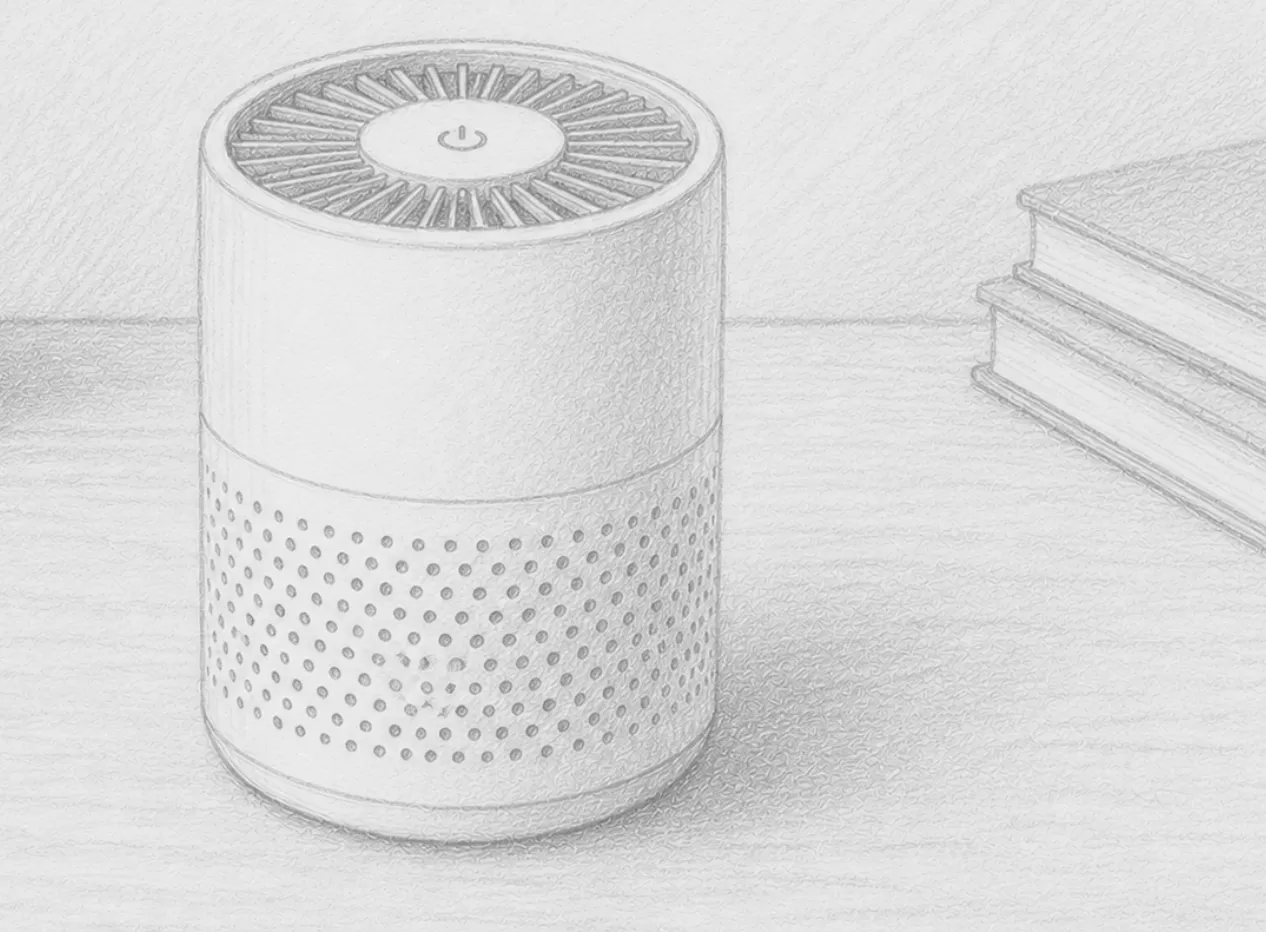
An air purifier with a true HEPA filter and an activated carbon layer is the standard recommendation for home offices:
- True HEPA filter: Captures 99.97% of particles 0.3 microns or larger, including dust, pollen, pet dander, mold spores, and most PM2.5.
- Activated carbon layer: Adsorbs gases and odors, including VOCs and smoke.
- CADR rating: Clean Air Delivery Rate measures how quickly the purifier filters the air in a given room size. Match the purifier’s CADR to your office’s square footage.
- Noise level: Home office purifiers should run quietly on their standard setting. Check the decibel rating at low speed — many people run purifiers continuously during the workday.
Humidity: The Overlooked Variable
Home office humidity affects both your comfort and your equipment:
- Too dry (under 30% RH): Dry eyes, dry skin, irritated nasal passages, increased susceptibility to respiratory infections. Also causes static buildup that can damage electronics.
- Too humid (above 60% RH): Promotes mold, dust mites, and bacterial growth. Also causes electronics to corrode over time.
The ideal range for both comfort and equipment is 40–60% relative humidity. A small desktop humidifier in dry climates (especially in winter when heating systems dry the air) or a dehumidifier in humid climates keeps you in that range. A hygrometer on your desk tells you exactly where you are.
Plants: Real Benefit or Myth?
The original NASA study on plants and air quality was conducted in a sealed chamber environment, not a real room. In practice, you would need hundreds of plants to meaningfully filter a room’s air.
However, plants do contribute in less dramatic ways: small amounts of VOC absorption, moderate humidity addition through transpiration, and significant psychological benefit. Studies consistently show that plants in a workspace reduce stress, improve mood, and increase self-reported wellbeing. That’s not nothing. Just don’t rely on your pothos to replace an air purifier.
Simple Steps That Make a Real Difference
- Open a window for 10–15 minutes per hour if outdoor air quality allows. The ventilation benefit is immediate and significant.
- Place an air purifier near your desk and run it continuously. Background white noise from a purifier can also improve focus.
- Add a CO2 or air quality monitor to see real-time data on your workspace conditions.
- Maintain 40–60% humidity with a hygrometer and humidifier/dehumidifier as needed.
- Avoid VOC sources in your office: choose low-VOC paints, air out new furniture before using it in an enclosed space, and avoid scented candles or air fresheners.
The air in your home office is something you can control. Unlike the building HVAC systems of a traditional office, your home environment is entirely yours to optimize — and the cognitive and health payoff is real.
Recommended Products
Key tools for a healthier home office environment:
- HEPA Air Purifier for Home Office — A compact, quiet HEPA + activated carbon air purifier sized for a bedroom or office. Look for one rated for at least 150–200 sq ft with a low-noise mode.
- CO2 and Air Quality Monitor — Real-time monitoring of CO2, temperature, and humidity on your desk. Knowing when to ventilate makes a meaningful difference.
- Desktop Humidifier — A small cool-mist humidifier for dry climates or winter months. Keeps your breathing comfortable and static down during long work sessions.
As an Amazon Associate, we earn from qualifying purchases.